
Food photography backgrounds: how to pick one for each dish
RestoPhoto Team · October 21, 2026 · 7 min read
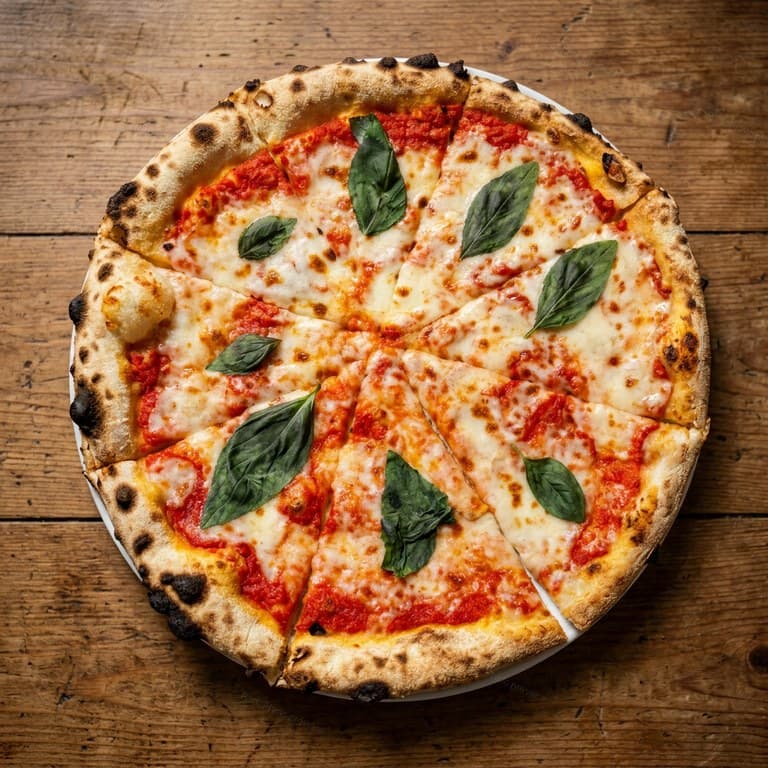
Choose the background by the dish. Put dark food on a light surface and pale food on a dark one, so the edges of the food stay clear. Keep the surface plain: wood, stone, marble, steel or linen in one color. Then use the same two or three backgrounds in every post, so your profile looks like one venue.
The background is everything in the frame that is not food: the table, the board, the cloth and the plate. Most good backgrounds are already in your kitchen.
Start with contrast
Look at the main color of the dish first. Then pick a surface that is clearly lighter or darker than that color.
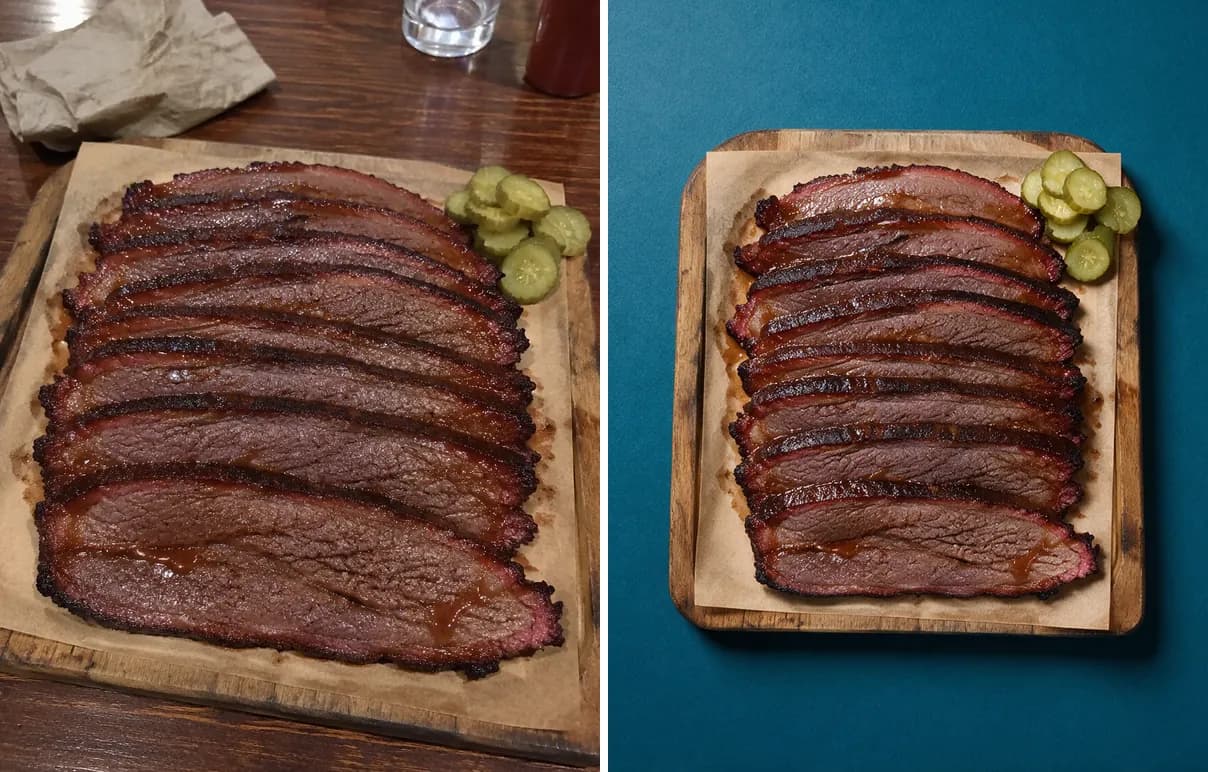
- Dark dishes, such as brisket, ribs, chocolate cake or chili: put them on light marble, a white table, pale wood or kraft paper.
- Pale dishes, such as mac and cheese, cheesecake or clam chowder: use black marble, slate, a dark table or a dark baking sheet.
- Colorful dishes, such as salads, poke bowls or tacos: use gray, beige or off-white, and let the food bring the color.
- Avoid brown on brown. A burger on a dark wood table loses its outline, so move it to a lighter board.
Texture follows the same rule. A smooth soup or sauce looks good on rough wood or linen. Crusty bread and fried coatings stand out on smooth marble or steel.
The plate is part of the background
The plate sits between the food and the table, so pick it with the same care. A white plate is the safe default, because it separates the food from almost any surface.
Plate color even changes how people judge the taste. Piqueras-Fiszman, Alcaide, Roura and Spence tested this in 2012 with a strawberry mousse. On a white plate, the same mousse tasted more intense and sweeter than on a black plate, and people liked it more.
Stewart and Goss tested the question again in 2013, with cheesecake and 48 people in a Canadian university cafeteria. On a white round plate, people rated the cheesecake about 20% sweeter and 30% more intense.
Both studies measured taste at a table, not reactions to a photo. They still show that people judge food together with what it sits on.
Piqueras-Fiszman et al. (2012): Is it the plate or is it the food? (Food Quality and Preference)
Dark or light: one family for your profile
Dark backgrounds suit evening places: steakhouses, bars, BBQ joints and ramen shops. Light backgrounds suit daytime places: cafes, bakeries and brunch spots.
Pick two or three backgrounds that fit your dining room and keep them for months. Someone who opens your profile then sees one venue, not a collection of random tables.
A strong color can be your signature too. Use it only when it sets off the main color of your dishes, and then use it for the whole series.
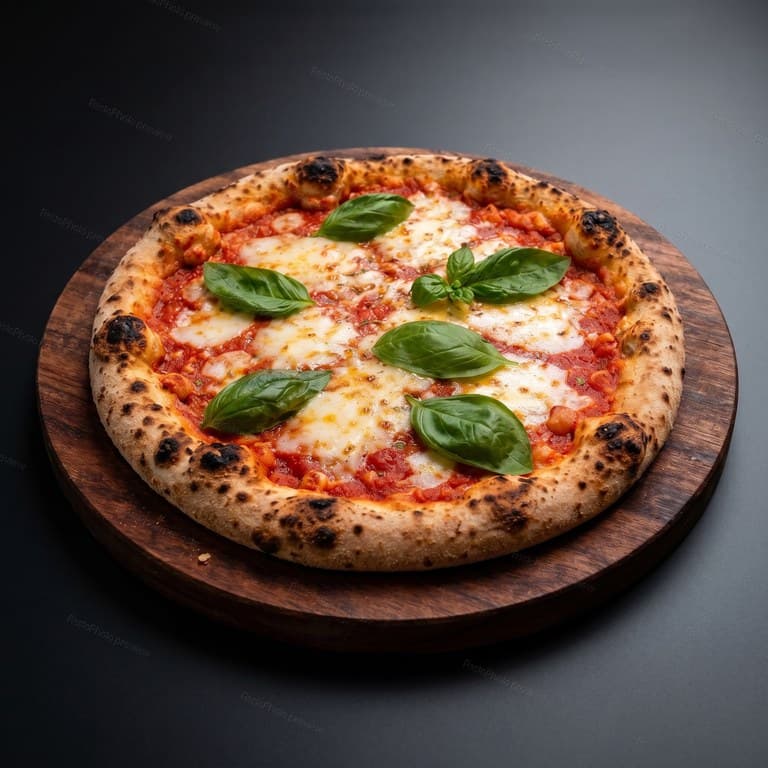
Tall dishes need a backdrop too
Shoot layer cakes, burgers and drinks in tall glasses from the side or at an angle, never from above. The wall behind the dish then becomes part of the frame.
Set the dish on a plain surface and put a plain backdrop behind it: a light wall, a sheet of poster board or a cloth. For a layer cake, cut one slice so the layers show.
Background ideas from your own kitchen
You do not need to buy props. Look in the kitchen and the storeroom first.
- The dining table, if it is plain. Wipe it and clear salt shakers, menus and spare cutlery.
- A stainless steel counter. It looks clean and modern. Shoot at an angle where it does not mirror the ceiling lights.
- A dark baking sheet or sheet pan. Worn metal suits pizza, roast vegetables and fries.
- A wooden cutting board with a calm grain. Use the side with fewer knife marks.
- A slate board or a stone floor tile. Both give a matte surface that fits on any table.
- A linen napkin or tea towel in one color. Iron it flat, or let one edge fold softly.
- Kraft or butcher paper. It suits burgers, sandwiches, BBQ and fried food.
- A background board. Paint a sheet of plywood with matte paint, a different color on each side. One board gives you two backgrounds.
Keep these out of the frame
- Busy patterns: checks, florals and strong wood grain compete with the food.
- Other brands: a ketchup bottle, a soda can or a sauce label pulls the eye away from your dish.
- Shiny plastic and glossy tables: they reflect lamps and windows as white spots.
- Clutter: tickets, squeeze bottles, phone cables and used napkins.
- Colored walls next to the table: red or green paint can tint the whole photo.
Delivery apps have their own rules
Uber Eats asks for cover images with "a simple background (wood, stone, marble, etc.)". Its rules also say that item photos cannot show dirty surfaces, dirty plates or packaging, or used cutlery.
Uber Eats: menu and catalog photo guidelines for merchants
Sizes and shapes differ from app to app. The guide to DoorDash, Uber Eats and Grubhub photos lists them.
Delivery app food photos: sizes for DoorDash, Uber Eats and Grubhub
Change the background without a new shoot
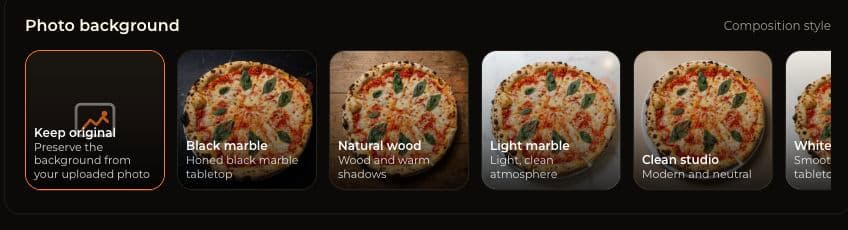
RestoPhoto starts from one phone photo of a real dish. In the Studio, choose Custom settings, then pick a surface in the Photo background panel. It has twelve options:
- Keep original: the table from your photo stays.
- Stone and tables: Black marble, Light marble, White table and Black table.
- Wood and fabric: Natural wood, Tablecloth (colour), Tablecloth (auto) and Draped linen.
- Studio and outdoors: Clean studio, Sunny grass and Floating on water.
Pick Keep original when your real table is part of your style. On the Growth and Pro plans, the Custom background (optional) field takes your own description of a surface, for example the oak of your bar.
A finished photo takes 1 to 3 minutes. RestoPhoto works in the browser and on iOS and Android.
The dish stays yours. What changes is the light, the backdrop and the framing. AI can still change small details of a dish, and some styles add props around the plate, so compare the result with your original before you publish.
Try it on one of your own dishes. Your first photo is free, no card.
Try RestoPhoto on one of your own dishes
Before you post, run the photo through the free Food Photo Checker. It checks blur, exposure, color cast, flat light and resolution.
Free tool: check a food photo before you post it
FAQ
What is the best background for food photography?
Use a plain surface that contrasts with the dish. Light marble or a white table suits dark food. Black marble, slate or a dark table suits pale food.
What color background is best for food photos?
Neutral colors are the safest: white, gray, beige, black and natural wood. Use a strong color only when it sets off the dish, and keep it for the whole series.
How do I make a food photography background board?
Paint a sheet of plywood with matte paint, a different color on each side. Matte paint does not throw back bright spots from your lamps.
Should I use a white or a black background for food?
Use white or light surfaces for dark and colorful dishes and for daytime places. Use black for pale dishes and evening places. If in doubt, keep the plate white.
Can I change the background of a food photo?
Yes. In RestoPhoto, choose a surface in the Photo background panel. The dish stays yours, so compare the result with the original before you post it.
Try RestoPhoto with your own photo
Upload a dish photo and choose a style. Compare the result with the original before publishing.
Try RestoPhoto