
Food Photography for Restaurants: The Five Things That Change the Picture
RestoPhoto Team · August 28, 2026 · 8 min read
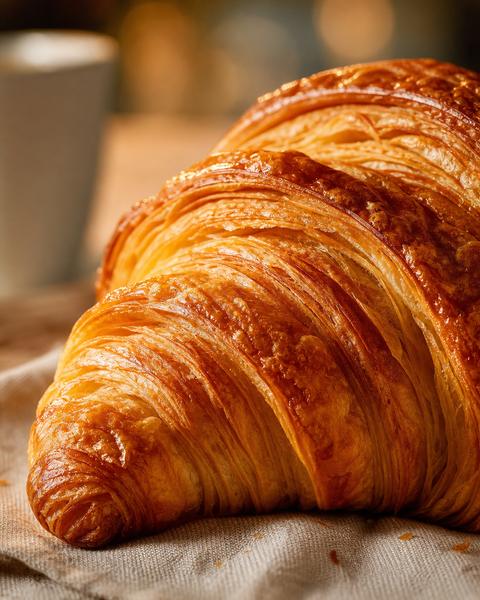
Restaurant food photos fail for one reason far more often than any other, and it has nothing to do with what you are shooting on. The phone in your pocket has a better sensor than the professional cameras that shot magazine food twenty years ago. What it does not have is somebody deciding where the light comes from.
Three things account for almost the entire distance between your photograph and the one you keep admiring: light, angle, background. All three are free, none of them require equipment, and you can fix all three before your next service.
Turn the ceiling lights off
This is the single highest value sentence in this article and it sounds wrong, so here is why.
Daylight from a window is blue. The lamps over your pass are orange. When both land on the same plate, the picture has two different colours of light on it at once, and no amount of editing fixes that afterwards, because the correction that fixes one half ruins the other. Your white plate ends up grey on one side and yellow on the other, and the food looks slightly ill.
One source of light. Take the plate to a window, kill the lamp above it, and you have solved a problem most people spend years blaming on their phone.
The window goes to the side, not behind you
Stand with the window behind you and the light lands flat on the food, filling in every shadow. Flat light makes everything look like a supermarket photograph, because it removes the only thing that communicates texture.
Turn ninety degrees so the light comes across the plate from one side. Now the crust has an edge, the sauce has a highlight, the steam has something to be visible against. If the shadow side goes too dark, put a menu card or a sheet of white paper on the opposite side, standing up, and it will bounce enough light back. That is the entire lighting kit.
Two angles, and a rule for choosing
Do not improvise a new angle for every dish. There are two that work, and the choice between them is not a matter of taste.
Photograph the axis where the food has the most information. A pizza, a bowl of ramen, a board of small dishes, a curry: everything they have to say is spread out flat, so shoot straight down. A burger, a stacked sandwich, a slice of layered cake, a glass: everything they have to say is in their height, so drop to the level of the plate or just above it.
Shooting a burger from above is the most common single mistake in restaurant photography. From up there it is a bun. Everything you actually charge for is hidden under it.
The background is doing more damage than you think
Look at the last dish photo you posted and count the objects that are not food. A cloth, a corner of a blue crate, a bottle of sanitiser, a hand, part of a laminated sheet. Each of those is asking for a share of attention, and the plate is losing.
You do not need a surface you own. You need a surface that repeats. Pick one and use it for everything: the wooden prep bench, a slate, a sheet of stone offcut from a countertop supplier, the back of a baking tray. Consistency does more for how a restaurant looks online than any single beautiful photograph, because it is what makes twelve separate pictures read as one place.
Where menu shots differ from what you post
Same dish, same window, two different jobs, and this trips up a lot of kitchens who shoot once and use the result everywhere.
- A menu or delivery listing shot is usually landscape or square, one dish, centred, with room around it, because the platform will crop it into a small tile. Lieferando asks for 4:3 landscape, and other platforms each want their own ratio.
- It has to be consistent with every other item on that list. A menu where four dishes were shot on marble and eight on wood looks careless in a way a single photo never does.
- It has to match the plate exactly. A menu photo is close to a promise, and the guest is holding your version of it while your version arrives.
- What you post is the opposite. Vertical, closer, a hand in frame is a plus, consistency matters much less, and a slightly imperfect frame often outperforms a clean one.
The practical consequence is to shoot wider than you think you need. A frame with room around the plate can be cropped into a landscape tile and into a vertical post. A frame that is already tight can only become one of them, and you will not have the dish back tomorrow.
Worth keeping in proportion, though: the menu gets photographed once and then sits there for a year. The profile is hungry every week, and it is the one that reaches somebody who has not eaten with you yet.
Photograph during prep, never during service
At half past seven the light is gone, the pass is full, and every second you spend on a photograph is a second the guest paid for. Nothing good is produced under those conditions and it is the reason most kitchens quietly stop trying.
Do it at eleven. Line up three or four dishes one after another in the same spot with the same light. You are not doing four photo sessions, you are doing one session with four subjects. The phone stays where it is and the plates change.
When the light is simply not there
Some kitchens have no window worth the name. A basement, a north wall, a winter afternoon that is dark by four. That is a real limit and no advice about turning ninety degrees solves it.
This is where an AI tool earns its place, and it is worth being precise about what it should and should not do. Relighting a photograph and replacing a cluttered background is editing, the same work a retoucher has always done, and there is nothing dishonest about it. Changing what is on the plate is a different thing entirely. If a tool adds a garnish your kitchen does not stock, or turns six prawns into nine, the guest who ordered from that picture is going to be disappointed and it will be your review, not the software's.
So whatever you use, check the result against the plate you photographed, item by item, before it goes anywhere. That is the whole ethical test and it takes five seconds.
Ten minutes, twice a week
- Pick the spot with the best window and use it every time.
- Kill any lamp that reaches that spot.
- Put the plate so the light crosses it from one side.
- Choose your angle by where the food carries its information: flat things from above, tall things from the side.
- Shoot wider than feels right, so one frame can become both a listing tile and a vertical post.
- Three or four dishes in a row, same spot, same light. Then back to work.
None of this is photography as a craft. It is six decisions made once and then repeated, which is the only kind of routine that survives a kitchen. Start tomorrow at eleven with whatever you happen to be prepping.
Do it without a photographer
Upload one phone photo of a dish and RestoPhoto lifts it to studio quality, makes a reel and a QR menu. Without changing your dish.
Try RestoPhoto